Morsight: A Bold Blackletter Font for Gothic-Inspired Design Projects
Fonts are more than just visual elements—they’re a critical part of the design process, influencing brand identity, user engagement, and overall aesthetics. When choosing the right typeface for your project, especially one that needs to convey strength, tradition, or an artistic edge, Morsight stands out as a compelling option. This new blackletter display font merges medieval charm with a modern twist, offering designers a unique tool to create impactful visuals across various platforms.
What is Morsight?
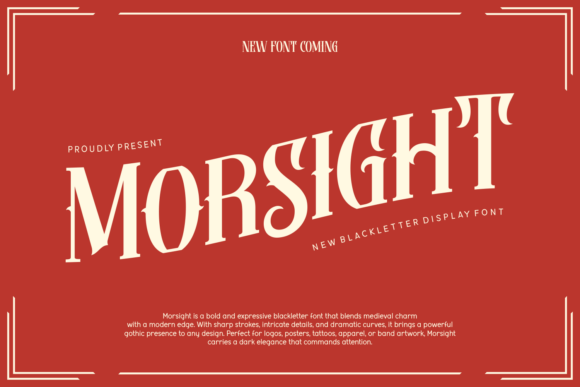
Morsight is a bold, expressive blackletter font designed for those who want to add a strong gothic presence to their work. Its stylized characters combine the ornate flourishes typical of historical blackletter styles with clean, contemporary lines that enhance readability and versatility. While traditional blackletter fonts can sometimes feel too archaic for today’s audiences, Morsight bridges this gap by maintaining the essence of its roots while adapting to current design trends.
This font is particularly well-suited for logos, posters, tattoos, and apparel—anywhere where a dramatic, memorable typographic style is needed. It allows designers to evoke a sense of authority, mystique, or craftsmanship without sacrificing clarity or usability in digital formats.
Integrating Morsight into Your Creative Workflow
Whether you're working on a branding project or designing promotional materials, integrating Morsight into your workflow requires thoughtful planning and execution. Here’s how it fits naturally into different stages of the creative process:
Before Project Launch
Start by assessing whether Morsight aligns with your project's tone and purpose. For instance, if you're launching a line of handmade leather goods or a fantasy-themed game, Morsight could help establish a distinctive visual identity. During the initial research phase, consider how blackletter fonts have been used historically and what modern applications might suit them best.
- Define your audience: Will they appreciate the boldness and uniqueness of a gothic-style font? Consider demographics and design preferences.
- Set project goals: Decide if Morsight will serve as the primary font or be used selectively for emphasis or branding elements.
- Test compatibility: Ensure that the font works well with your chosen design software and across different devices and platforms.
During Design Execution
Once you’ve decided to use Morsight, the next step is implementation. This involves selecting the right weights, spacing, and pairing fonts to complement it. Since Morsight is a display font, it shines best in headlines, titles, and large text blocks rather than body copy.
- Select appropriate tools: Use Adobe Illustrator, Photoshop, or Figma to experiment with Morsight’s character set and styling options.
- Pair with complementary fonts: To maintain balance in your designs, pair Morsight with a sans-serif or serif font that offers contrast without clashing.
- Adjust kerning and leading: Because of its intricate letterforms, Morsight may require manual adjustments to ensure legibility and visual harmony.
After Finalizing the Design
After incorporating Morsight into your final design, focus on quality control and long-term usability. Evaluate how the font looks at various sizes and resolutions, especially if it will be printed or displayed digitally. Also, consider licensing and usage rights to avoid any legal complications when deploying the font publicly.
For web-based projects, convert the font to a web-safe format like WOFF or TTF using online tools such as Font Squirrel’s Webfont Generator. This ensures smooth performance across browsers and mobile devices.
Use Cases and Implementation Tips
Here are some specific scenarios where Morsight can elevate your design and practical tips for each:
Logo Design
A logo is often the first point of contact between a brand and its audience. Morsight brings a powerful visual statement to logos, especially for businesses in industries like fashion, music, or entertainment. Its strong character shapes can communicate a sense of heritage and individuality.
- Use Morsight for the main title or emblem of the logo.
- Balance it with simpler supporting text for taglines or subtitles.
- Consider adding subtle shadows or outlines to enhance depth and visibility against busy backgrounds.
Poster and Print Media
Posters need to capture attention quickly. Morsight can help you create a striking focal point that draws viewers in. Whether promoting a concert, event, or product launch, its bold appearance ensures your message is seen and remembered.
- Apply Morsight to headline text; keep supporting content in a more readable format.
- Experiment with color overlays or gradients to give the font a dynamic look.
- Ensure the font remains legible from a distance—test print samples before going to full production.
Tattoo and Apparel Design
In tattoo and apparel design, typography plays a crucial role in conveying personal meaning or brand messaging. Morsight’s blend of gothic flair and modern structure makes it ideal for custom phrases, band names, or product labels that need a strong typographic impact.
- Sketch out ideas first to visualize how Morsight will appear in real-world contexts.
- Use vector-based tools like Adobe Illustrator for scalable application on fabric or skin.
- Pay close attention to spacing and alignment to avoid clutter or distortion in small formats.
Compatibility and Organizational Best Practices
While Morsight is visually rich, its integration must be handled carefully to maintain efficiency in your workflow. Here are some considerations for ensuring it works well with other tools and resources:
Software Compatibility
Morsight supports most major design platforms including:
- Adobe Creative Suite (Illustrator, Photoshop, InDesign)
- CorelDRAW
- Figma and Canva for digital-first creators
Before using it in a collaborative environment, confirm that all team members have access to the same version of the font. Version mismatches can lead to inconsistent outputs, especially in print or cross-platform media.
Usability Across Devices
If your project spans both print and digital media, test Morsight’s appearance on different screens and printers. The font should remain sharp and clear even when scaled down or viewed on high-resolution displays.
You might also consider creating layered files where Morsight is applied as a smart object or outlined shape. This prevents accidental edits and maintains consistency during revisions or repurposing.
Workflow Examples
Let’s walk through a few real-world examples of how Morsight can be used effectively within different workflows:
Case Study 1: Brand Identity for a Craft Brewery
A craft brewery wanted to emphasize tradition and authenticity in its rebranding effort. The designer chose Morsight for the label and taproom signage because it evoked a timeless, handcrafted feel. They paired it with a minimalist sans-serif for ingredient lists and descriptions, allowing the bold typography to stand out while keeping the rest of the layout clean and easy to read.
Implementation involved outlining the Morsight text in vector form to ensure it would print clearly on glass and cardboard. The team also created a brand guide that included specific guidelines for font size, spacing, and color treatment when using Morsight across packaging, websites, and social media.
Case Study 2: Event Poster for a Music Festival
An independent music festival needed a poster that conveyed energy and a nod to classic rock aesthetics. Morsight was selected for the event name and artist lineup due to its strong, gothic presence. The designer adjusted the spacing manually to accommodate the longer band names and ensured that the font was visible from afar in both print and digital formats.
The poster was then exported in multiple file types—PDF for printing, JPEG for social sharing, and SVG for web banners. Each version retained the integrity of the Morsight font, thanks to careful formatting and testing.
Long-Term Use and Consistency
When building a brand or managing a long-term project, consistency is key. Using Morsight strategically ensures that it becomes a recognizable element of your visual language without overwhelming the viewer.
To maintain consistency:
- Create a style guide that includes approved uses of Morsight along with alternatives for smaller text areas.
- Use naming conventions for layers or text boxes that include “Morsight” in the title to streamline asset management.
- Store the font in a shared resource folder accessible to all collaborators.
Additionally, consider exporting variations of the font in different weights or styles if available. This gives you more flexibility in design without overcomplicating your workflow.
Quality Control and Practical Observations
One thing to note about Morsight is that it performs best in controlled environments. Because of its decorative nature, it’s not recommended for dense paragraphs or technical documents. However, when used correctly, it adds a level of sophistication and drama that few other fonts can match.
Some practical observations include:
- Always preview the font at the intended output size before finalizing a design.
- Be mindful of background textures—high-contrast combinations often yield the clearest results.
- Outline the text in design software when preparing files for print or embroidery to prevent rendering issues.
Conclusion
Morsight is more than just another blackletter font—it’s a versatile tool that can bring a powerful visual element to your projects. By understanding how and when to apply it, you can integrate it smoothly into your design processes and leverage its strengths to create compelling, professional outcomes.
Whether you're a small business owner, a graphic designer, or someone exploring typography for personal branding, Morsight provides a reliable and expressive solution. With proper preparation, testing, and integration, it can become a valuable asset in your creative toolkit.