Alterlong: A Modern Blackletter Font Merging Neo-Gothic and Synthwave Design
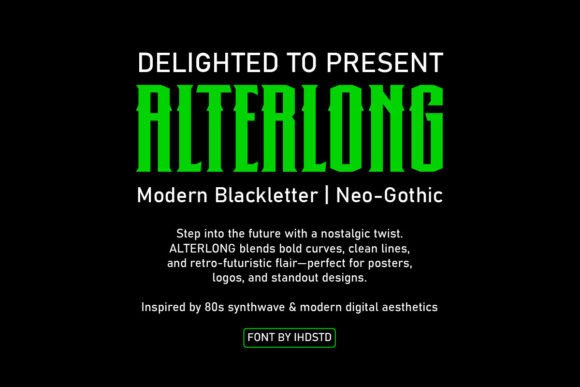
Alterlong is a distinctive typeface that stands out in the world of typography by combining traditional blackletter elements with contemporary, futuristic aesthetics. Inspired by the vibrant visual culture of the 1980s—synthwave, digital art, and retro-futurism—this font reimagines the classic gothic letterforms through a modern lens. Its sharp vertical lines, geometric serifs, and sleek construction offer a unique balance between vintage charm and cyberpunk edge. Whether you're designing for print or digital media, Alterlong provides a bold, expressive choice for typographic projects seeking both attitude and sophistication.
The Essence of Alterlong’s Design
Blackletter fonts, also known as Gothic or Old English scripts, are traditionally associated with medieval manuscripts and formal historical documents. Alterlong, however, breaks from this convention by incorporating minimalist and geometric traits. This neo-gothic approach makes it visually distinct from older blackletter styles, which often feature more ornate and calligraphic details. The result is a font that feels simultaneously nostalgic and forward-thinking.
What sets Alterlong apart is its emphasis on clarity and structure while maintaining the dramatic flair of blackletter design. The characters have strong vertical forms with clean, angular serifs, making them legible at various sizes. Unlike many blackletter fonts that can appear cluttered or difficult to read in large blocks of text, Alterlong retains a sense of order and precision, ideal for headlines, logos, and short bursts of impactful text.
Inspiration from 80s Synthwave and Digital Aesthetics
Alterlong draws heavily from the visual language of 80s synthwave and early digital design. These influences are evident in its crisp edges, high contrast strokes, and the overall sense of technological optimism embedded in its form. The font evokes the neon-lit nights, grid-based compositions, and pixel-perfect graphics that defined the era's aesthetic. For designers aiming to capture that retro-futuristic vibe, Alterlong serves as a compelling tool that bridges analog history with digital modernity.
This inspiration isn’t just superficial. The font’s design choices reflect an understanding of how 80s-inspired visuals resonate with today’s audiences. It taps into the same emotional appeal as the music, movies, and video games of that time—offering a sense of rebellion, innovation, and nostalgia all in one package.
Strengths and Use Cases for Alterlong
One of the key strengths of Alterlong is its versatility across different mediums and purposes. It works exceptionally well in applications where visual impact is crucial:
- Posters and flyers: The bold character shapes and strong presence make Alterlong perfect for eye-catching designs that need to stand out from a distance.
- Album covers and music branding: Especially for genres like synthwave, electronic, or alternative rock, Alterlong offers an authentic visual match to the sound.
- Logos and brand identities: Its fusion of gothic tradition and modern minimalism allows it to convey authority and creativity, fitting for both edgy startups and heritage brands looking to innovate.
- Apparel and merchandise: When used sparingly, Alterlong adds a stylish touch to t-shirts, hoodies, and other fashion-forward items.
- Typographic art and editorial design: The font’s striking geometry supports creative layouts without overwhelming the composition.
These use cases highlight Alterlong’s ability to adapt to varied contexts. Its design is not limited to a single niche but instead thrives in environments that benefit from a confident, stylized typeface.
Comparing Alterlong to Other Typographic Styles
To better understand where Alterlong fits within the broader landscape of typography, it helps to compare it to other popular styles:
Traditional Blackletter Fonts
Fonts like Kuenstler Script or Fraktur represent the classic blackletter style. While they share the same historical roots as Alterlong, they differ significantly in readability and application. Traditional blackletters often prioritize artistic expression over practicality, making them less suitable for modern design needs. Alterlong, by contrast, maintains the elegance and weight of these classics while streamlining their structure for contemporary use.
Modern Sans-Serif Fonts
Sans-serif fonts such as Helvetica or Futura are staples in modern design due to their clean, neutral appearance. However, they lack the dramatic personality that Alterlong brings to the table. If your project requires a more subdued tone or extended text passages, a sans-serif might be a better fit. But when you want to infuse a design with energy and a sense of movement, Alterlong delivers where others fall short.
Neo-Gothic Typefaces
Other neo-gothic fonts like Bauhaus 93 or Franklin Gothic aim to modernize blackletter elements. Bauhaus 93, for instance, leans heavily into geometric shapes and minimalism, making it a popular choice in tech and design communities. While similar in some respects, Alterlong distinguishes itself with a more pronounced vertical emphasis and a refined balance between angularity and readability. This gives it a slightly heavier and more expressive feel compared to Bauhaus 93, which tends to be flatter and more industrial.
Decorative and Display Fonts
Display fonts are typically used for headlines or decorative purposes rather than body text. Alterlong aligns well with this category, offering a strong visual identity that commands attention. Compared to highly stylized display fonts like Bevan or Cinzel Decorative, Alterlong presents a more structured and cohesive design. This makes it particularly useful for projects requiring consistency across multiple design elements.
When to Choose Alterlong and When to Consider Alternatives
Selecting the right font depends on the specific goals of your project. Here’s how to determine if Alterlong is the best fit:
Ideal Scenarios for Alterlong
- High-impact visual projects: If you’re creating a poster, album cover, or any design that relies on strong typography to communicate mood or message, Alterlong is a powerful option.
- Retro-futuristic themes: For work inspired by the 80s, sci-fi, or cyberpunk aesthetics, Alterlong’s design naturally complements these visual languages.
- Short-form typographic statements: Given its bold nature, Alterlong excels in short phrases, taglines, or logos where legibility isn't compromised by brevity.
- Projects needing a blend of old and new: Brands or designers who want to honor traditional design elements while embracing modern minimalism will find Alterlong’s hybrid style appealing.
Potential Limitations and Alternatives
Despite its strengths, Alterlong may not be the optimal choice in every situation. Here are some considerations:
- Long-form reading material: Due to its condensed and stylized letterforms, Alterlong is not recommended for long paragraphs or body text. In such cases, a serif or sans-serif font with higher readability would be preferable.
- Formal or academic settings: Traditional blackletter fonts or serif typefaces like Times New Roman or Georgia may be more appropriate for scholarly or official documents.
- Minimalist or ultra-clean designs: While Alterlong has a minimalist influence, its gothic origins add a level of complexity that could clash with ultra-modern or Scandinavian-style simplicity.
- Projects with diverse linguistic requirements: Some stylized fonts don’t support full Unicode character sets or international language features. Before using Alterlong in multilingual contexts, verify its compatibility with the necessary symbols and glyphs.
In each of these scenarios, alternatives exist that might better suit the context. The key is to evaluate what each font brings to the table and whether it aligns with your project’s tone, audience, and purpose.
Evaluating Tradeoffs in Stylistic Choices
Like any specialized font, Alterlong comes with tradeoffs. Understanding these can help you decide whether it meets your needs or if another font might serve better:
Pros of Using Alterlong
- Unique combination of neo-gothic and synthwave influences.
- Strong visual hierarchy and presence in headlines and logos.
- Geometric serifs and clean lines enhance legibility compared to older blackletter styles.
- Offers a modern twist that appeals to younger audiences and design enthusiasts.
Cons of Using Alterlong
- Limited suitability for body text due to its condensed and stylized form.
- May not integrate seamlessly with overly simplistic or abstract visual styles.
- Requires careful pairing with supporting fonts to maintain typographic harmony.
- Its boldness can overpower subtle design elements if not balanced correctly.
These pros and cons aren’t absolute but rather situational. The effectiveness of Alterlong ultimately depends on how well it matches the intent and context of your design.
Best Practices for Integrating Alterlong
To maximize the potential of Alterlong in your designs, consider the following tips:
- Pair with simpler fonts: Use Alterlong for headlines and pair it with a clean sans-serif or serif font for subheadings and body text to create contrast and balance.
- Limit color usage: While Alterlong looks great in monochrome, adding too many colors can distract from its elegant structure. Stick to two or three tones for maximum effect.
- Use spacing wisely: Because of its bold and condensed nature, ensure adequate line spacing and character spacing to avoid a cramped appearance.
- Consider background contrast: Alterlong benefits from being placed against solid or gradient backgrounds rather than complex textures that may obscure its details.
By applying these strategies, you can leverage Alterlong’s strengths while mitigating its limitations, ensuring it enhances rather than hinders your design.
Conclusion
Alterlong is a standout font that successfully merges the gravitas of blackletter typography with the sleek, synthetic energy of 80s-inspired design. Its strength lies in delivering a bold, confident statement that resonates with both modern and nostalgic audiences. However, like any tool, it’s most effective when used appropriately. Evaluate your project’s needs carefully, considering factors like content length, target demographic, and stylistic direction before choosing Alterlong as your primary font.
For those working on posters, logos, album artwork, or fashion branding, Alterlong is an excellent candidate. But for long-form content, minimalist aesthetics, or formal communication, exploring other options might yield better results. The goal is always to choose the font that best supports your message and enhances your visual identity—not the one that simply looks impressive on paper.