Ghost Disaster: A Gothic Font for Spooky and Vintage Design Projects
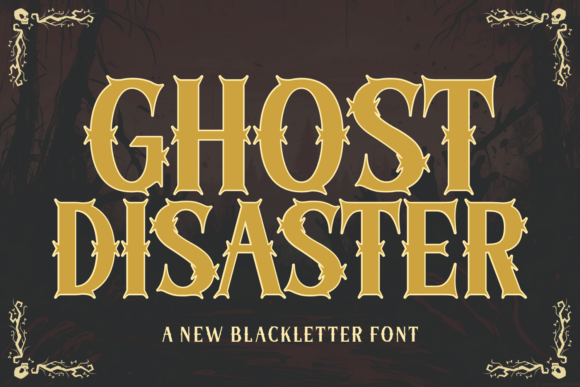
Ghost Disaster is a distinctive blackletter font that embodies the essence of horror, vintage gothic aesthetics, and autumnal themes. Designed with attention to detail, it features an ornate, thorny frame and skull motifs in the corners, which add an eerie and dramatic flair to any design. This font has been crafted specifically to cater to Halloween projects, movie titles, fantasy branding, and other creative endeavors where a haunting visual presence is desired.
Why People Might Be Interested in Ghost Disaster
Fonts play a crucial role in shaping the tone and mood of a design. Ghost Disaster appeals to designers and content creators who want to evoke a sense of mystery, darkness, or nostalgia. Its intricate style makes it ideal for those working on:
- Halloween marketing materials, such as posters, invitations, and banners.
- Fantasy game or book covers, where a medieval or mystical feel is important.
- Horror film titles and promotional artwork requiring strong typographic impact.
- Branding for niche businesses, including haunted house experiences, vintage-themed cafes, or gothic fashion lines.
Benefits of Using Ghost Disaster
The primary advantage of Ghost Disaster lies in its unique visual identity. Here are some key benefits:
- Vintage Horror Aesthetic: The combination of blackletter letterforms and gothic embellishments gives it a timeless, spooky vibe.
- High Visual Impact: The ornate frame and skull details make it stand out even without additional graphics.
- Thematic Versatility: It works well in both digital and print formats for seasonal events, storytelling, or themed promotions.
- Attention to Detail: The font's craftsmanship reflects a deep understanding of gothic and horror design elements.
Tradeoffs and Considerations
While Ghost Disaster offers a bold and evocative style, it may not be suitable for every project. Some considerations include:
- Readability: Blackletter fonts can be challenging to read at smaller sizes or in long blocks of text. Use this font sparingly for headings or short phrases.
- Color and Contrast: Because of its dark and intricate nature, care must be taken when choosing background colors or ensuring sufficient contrast for legibility.
- Design Context: The font’s horror theme might clash with more modern or minimalist design styles. Evaluate how well it complements your overall visual strategy.
When Ghost Disaster Is a Strong Fit
Ghost Disaster shines in specific contexts where its thematic strength can enhance the message or mood. These include:
- Seasonal Campaigns: Especially around Halloween, this font helps create immersive environments that align with the spooky atmosphere.
- Creative Branding: For brands targeting a gothic or horror-inspired audience, using Ghost Disaster can reinforce their identity and attract the right demographic.
- Entertainment Titles: Movie, podcast, or book titles benefit from its dramatic presentation, especially in genres like horror, fantasy, or mystery.
- Event Promotion: Whether it’s a haunted house opening, a gothic festival, or a themed party, this font adds a memorable touch to event visuals.
When Alternatives May Be Worth Considering
Although Ghost Disaster is visually striking, there are scenarios where it may not be the best choice. If your project requires:
- High Legibility: In body text or small print, a simpler sans-serif or serif font might be more appropriate.
- Professionalism Over Creativity: Business reports, legal documents, or corporate communications typically need clean, readable fonts rather than decorative ones.
- Accessibility Compliance: Decorative fonts can hinder accessibility for users with visual impairments. Always consider alternative fonts for critical information.
- Multi-language Support: If you're designing for a global audience, ensure the font supports the necessary characters for all languages involved.
Practical Decision-Making Insights
Choosing the right font involves matching the design's purpose with the font's characteristics. When evaluating Ghost Disaster, ask yourself these questions:
- What is the primary goal of my design? Does it need to convey a serious, spooky, or vintage tone? Or does it require clarity and simplicity?
- Who is the target audience? Will they appreciate the aesthetic, or could it alienate them? Test it on a sample group if possible.
- Where will the design be used? Digital screens, printed materials, or signage each have different readability requirements. Ensure Ghost Disaster performs well in the intended format.
- How much customization do I need? Will the ornate frame and skull details work as-is, or should I look for a version with editable elements?
Expectations and Best Practices
If you decide to use Ghost Disaster, set realistic expectations for its performance. While it excels in creating visual drama, it should be used strategically to avoid overwhelming the viewer. Best practices include:
- Using it as a headline or title rather than body text.
- Pairing it with complementary fonts that balance its intensity—such as a simple sans-serif for supporting text.
- Testing it in different color schemes to find the most effective combination for your design.
- Considering customization options, like adjusting the size or spacing of the frame and skulls, to suit specific layouts.
Conclusion
Ghost Disaster is a powerful tool for designers looking to infuse their work with a gothic, horror-inspired aesthetic. Its ornate frame and skull details offer a rich visual experience, making it particularly useful for Halloween, fantasy, and entertainment-related projects. However, it’s essential to weigh its benefits against potential tradeoffs, especially regarding readability and design context. By considering your goals, audience, and medium, you can determine whether Ghost Disaster is the right fit—or whether another font would serve better. Ultimately, the best choice is one that enhances your message while maintaining usability and accessibility.