Dark Hurt: A Bold Blackletter Font with a Historical Edge
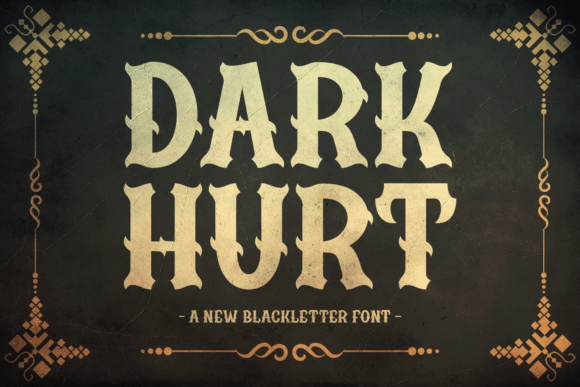
Typography plays a crucial role in visual communication, shaping how messages are perceived and experienced. For designers seeking to evoke a sense of gravitas, tradition, or rugged authenticity, blackletter fonts offer a compelling option. Among the latest additions to this category is Dark Hurt, a distinctive blackletter typeface that combines classic structure with an ornate, decorative frame. This unique design enhances its old-world charm, making it suitable for projects that demand a strong, historical aesthetic.
What Is Dark Hurt?
Dark Hurt is a modern reinterpretation of the traditional blackletter style, often associated with Gothic scripts from medieval Europe. Unlike more conventional blackletter fonts, which focus solely on the letterforms, Dark Hurt features an intricate, decorative frame that encases each character. This border adds depth and visual interest, reinforcing the font’s bold and commanding presence.
The combination of structured, angular lettering and the surrounding ornate frame gives Dark Hurt a distinct personality. It balances the harshness typically found in Gothic typography with the elegance of handcrafted details, offering a fresh take on an ancient style.
Why People Might Be Interested in Dark Hurt
Designers and creatives often look for fonts that can convey specific emotions or themes without relying heavily on color or imagery. Dark Hurt appeals to those who want to communicate strength, nostalgia, or a touch of mystique. Its design makes it particularly attractive for:
- Historical or fantasy-themed branding
- Cover art for books, especially in genres like horror, mystery, or literature
- Invitations or event posters requiring a dramatic flair
- Logo designs that need to stand out while maintaining a vintage feel
- Printed materials such as certificates, announcements, or packaging
The ornate frame also makes it ideal for use in compositions where individual letters or words need emphasis—such as in titles, headings, or call-out sections.
Benefits of Using Dark Hurt
One of the key advantages of Dark Hurt is its ability to command attention. The ornate frame draws the eye, making it effective for headlines and large text elements. Additionally, the font’s blackletter roots lend it an air of authority and timelessness, qualities that can be leveraged in a variety of creative contexts.
Another benefit is its versatility within the Gothic family. While many blackletter fonts can appear too rigid or difficult to read at smaller sizes, Dark Hurt maintains clarity thanks to its well-proportioned characters and thoughtful spacing. This allows for more flexible usage across different platforms and print media.
For digital creators, the availability of high-quality vector files ensures scalability without loss of detail. Whether used on a website banner or a high-resolution poster, the font retains its crisp edges and rich texture.
Tradeoffs and Considerations
Despite its strengths, Dark Hurt may not be the best choice for every project. The ornate frame and dense letterforms can reduce legibility, especially in body text or when used in small point sizes. As a result, it’s generally recommended for display purposes rather than extended reading passages.
Moreover, the font’s aesthetic may not align with all brand identities or design philosophies. Its heavy, gothic appearance might clash with minimalist or contemporary styles. Designers should consider the overall tone of their project before integrating Dark Hurt to ensure harmony with other visual elements.
There is also the matter of file size and performance. Because of the added complexity of the decorative frame, the font may have a larger file size compared to simpler alternatives. This could affect load times on websites if not optimized properly.
Situations Where Dark Hurt Excels
Dark Hurt shines in applications where visual impact and thematic consistency are paramount. Here are some scenarios where it would be a strong fit:
- Book Covers and Titles: The font's dramatic style works well for book covers in genres like fantasy, historical fiction, or horror. The frame adds a layer of sophistication that complements these themes.
- Event Posters and Invitations: Weddings, galas, or themed parties can benefit from the font’s regal and ornate look, especially when paired with complementary textures and colors.
- Brand Logos and Slogans: Businesses aiming to establish a heritage-driven identity—such as wineries, artisan shops, or historical societies—may find Dark Hurt an excellent choice for logos or taglines.
- Print Media and Packaging: From wine labels to candle packaging, Dark Hurt can enhance the tactile and visual appeal of physical products, particularly those targeting niche or luxury markets.
- Editorial Design: In magazines, newspapers, or blogs focusing on history, culture, or dark narratives, using Dark Hurt for headlines or pull quotes can elevate the content’s mood and tone.
When to Consider Alternatives
While Dark Hurt is visually striking, there are situations where it may not be the most appropriate choice. For instance, in digital interfaces where readability is critical—such as e-commerce sites, dashboards, or mobile apps—simpler sans-serif or serif fonts may perform better.
Additionally, in multilingual or international projects, the font’s blackletter base may limit language support, depending on the version available. Users should verify that the font includes the necessary glyphs for their intended language or script.
Projects with a modern, clean aesthetic might also find the ornate frame of Dark Hurt overwhelming. In such cases, alternative blackletter fonts without the additional embellishments—like Old English Text MT or Braggadocio—could provide a similar vibe with less visual clutter.
Practical Decision-Making Insights
Before incorporating Dark Hurt into your design work, ask yourself a few key questions:
- Is the purpose of my project to create a bold, attention-grabbing headline or title?
- Does the design theme align with historical, gothic, or fantasy elements?
- Will I be using this font primarily for display rather than body copy?
- Do I need support for multiple languages or extensive glyph sets?
- Am I prepared to handle potential performance issues due to larger file sizes?
Answering “yes” to most of these questions suggests that Dark Hurt could be a good match. However, if you’re designing for accessibility, usability, or a broad audience, you might explore more neutral or widely supported fonts.
It’s also wise to test Dark Hurt in context. How does it look alongside your existing design elements? Does it enhance the message or distract from it? A/B testing with real users can help determine whether the font supports your goals effectively.
Expectations and Best Practices
When working with Dark Hurt, manage expectations around its suitability. While it excels in visual storytelling, it requires careful application to avoid overpowering the rest of the design. Use it sparingly and pair it with contrasting fonts for balance. For example, combining it with a sleek sans-serif for supporting text can maintain readability while still leveraging its stylistic strengths.
Consider the background and color palette as well. Dark Hurt’s deep black tones and ornate frames can become lost on busy or low-contrast backgrounds. A solid white or light-colored backdrop often highlights its features best.
Finally, remember that font licensing matters. Ensure you understand the terms under which you can use Dark Hurt, especially if deploying it across multiple platforms or in commercial settings. Some fonts require specific licenses for web use, embedding in software, or redistribution.
Final Thoughts
Dark Hurt is a powerful tool for designers looking to infuse their work with a sense of history, drama, and craftsmanship. Its ornate frame and blackletter structure make it stand out in a sea of modern typefaces, but they also come with limitations in legibility and flexibility.
Choosing the right font depends on understanding your audience, the platform, and the message you wish to convey. If your goal is to create something memorable and visually rich, Dark Hurt offers a compelling solution. However, always weigh its benefits against the needs of your project to ensure the final result is both aesthetically pleasing and functionally sound.