Scarfire: A Bold Font for Dramatic Design Needs
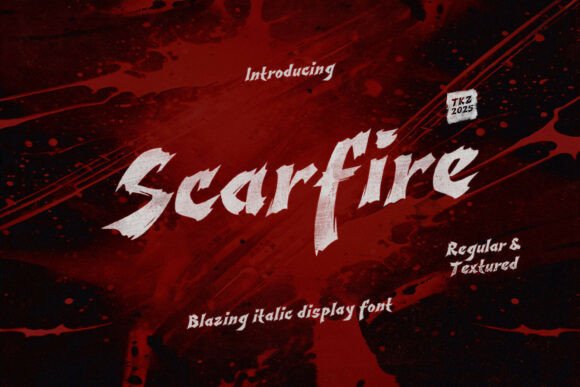
Scarfire is a distinctive blackletter font that combines the mystic allure of traditional lettering with the intensity of roaring flames. Designed to evoke fierce, dramatic energy, it features slanted brush strokes that give it a dynamic and edgy appearance. This font is particularly well-suited for visual projects that require a strong impact—such as horror posters, logos with an aggressive edge, or book covers aiming to grab attention.
What Makes Scarfire Stand Out?
The unique aesthetic of Scarfire lies in its blend of historical inspiration and modern flair. Blackletter fonts are known for their ornate and calligraphic style, but Scarfire adds a contemporary twist by incorporating fast motion elements and fiery textures. These characteristics make it ideal for designers looking to convey passion, power, or peril through typography.
Two Versions for Versatile Use
Scarfire comes in two variations: one clean and one rough textured. The clean version offers a more refined and readable take on the bold blackletter design, while the rough textured option enhances the dramatic effect with added depth and contrast. This dual availability allows users to tailor the font to their specific project needs, whether they're designing for print or digital media.
Reasons to Consider Scarfire
- Strong Visual Impact: If your goal is to create a striking visual statement, Scarfire's intense look can help you stand out in crowded spaces like social media, movie promotions, or album artwork.
- Cross-Genre Appeal: From horror and fantasy to punk rock and dark fantasy literature, Scarfire bridges multiple creative fields with its adaptable style.
- Emotional Resonance: The fiery, almost chaotic strokes of this font naturally lend themselves to themes of danger, rebellion, and mysticism—making it a compelling choice for content that aims to stir emotion.
- Language Neutrality: Its stylized form works across many languages, which is especially useful for international branding or multilingual publications.
Benefits and Tradeoffs of Using Scarfire
While Scarfire has several strengths, it's important to understand both the benefits and potential limitations before choosing it for your project.
Key Benefits
- Bold and Memorable: The font’s high contrast and dynamic curves make it easy to remember and visually engaging.
- High Customization Potential: With two distinct versions (clean and textured), designers can experiment with different moods and styles within the same typeface.
- Wide Application Scope: Whether you’re working on a poster, logo, or cover, Scarfire provides versatility across various formats and genres.
Potential Limitations
- Readability Concerns: Like most blackletter fonts, Scarfire may be challenging to read at smaller sizes or in dense text blocks. It's best suited for headlines and short phrases rather than body copy.
- Context Sensitivity: The aggressive and mystical tone of Scarfire might not align with all brand identities or message types. Projects requiring a calm, professional, or minimalist feel could find it mismatched.
- Licensing Restrictions: As with any commercial font, it's essential to check the licensing terms of Scarfire to ensure it fits your intended use case—especially if you plan to use it in software applications, merchandise, or web platforms.
When Scarfire Is a Good Fit
Scarfire shines in scenarios where visual drama is key. Here are some situations where it could be the right choice:
- Horror and Thriller Posters: The font’s ominous and intense appearance complements the suspenseful and dark nature of these genres.
- Edgy Brand Logos: For brands targeting a rebellious or adventurous audience, Scarfire can help establish a memorable identity.
- Book Covers and Titles: Authors of dark fantasy, occult-themed fiction, or action-packed thrillers can benefit from the font’s ability to evoke curiosity and urgency.
- Event Promotions: Music festivals, gaming conventions, or themed parties often use fonts like Scarfire to match the event’s vibe and attract the target demographic.
When to Look for Alternatives
Despite its appeal, there are cases where Scarfire may not be the optimal choice. Consider alternatives if:
- You need a font that works well in small sizes or for long paragraphs of text.
- Your project requires a more neutral or elegant aesthetic, such as corporate communications, wedding invitations, or educational materials.
- You want a font that supports a wide range of special characters or non-Latin scripts beyond what Scarfire offers.
- Your design already uses a lot of imagery or color, and you don’t want the font to overpower other elements.
Alternative Fonts to Explore
If Scarfire doesn't fit your needs, consider exploring similar fonts that offer a balance between style and functionality. Some popular options include:
- MedievalSharp – for a classic blackletter look without the flame-inspired edge.
- Beastie – a bolder, more aggressive blackletter font suitable for extreme themes.
- Gothic A1 – a clean and modern alternative for those who prefer readability over raw intensity.
Practical Tips for Using Scarfire
To get the most out of Scarfire, keep the following tips in mind when incorporating it into your designs:
- Use Sparingly: Because of its high contrast and density, it's best to limit Scarfire to headlines, titles, or short bursts of text.
- Pair Thoughtfully: Balance the font with a simpler, sans-serif typeface for body text or secondary information to maintain readability and visual harmony.
- Experiment with Textures: The rough textured version can add dimension to printed materials or digital assets when layered with effects like fire overlays or smoke textures.
- Consider Contrast: Ensure the font stands out against the background by using high-contrast colors. Dark backgrounds with light text, or vice versa, work particularly well.
Aligning Scarfire with Your Goals
Before committing to Scarfire, ask yourself a few key questions to determine if it aligns with your design objectives:
- Do I need a font that conveys strength, intensity, or mystique?
- Will my audience perceive this style positively, or might it come off as too harsh or intimidating?
- Am I using it primarily for display purposes, or will it also serve as functional text?
- Is the font’s aesthetic consistent with the overall theme and color palette of my project?
Answering these questions can help guide your decision and prevent misalignment between the font’s character and your design intent.
Final Thoughts
Scarfire is a powerful typographic tool for designers seeking to make a bold impression. Its fusion of fiery motion and blackletter tradition gives it a unique place in the world of decorative fonts. However, its effectiveness depends heavily on context and application. When used appropriately, it can elevate your visuals and reinforce your message. But if clarity and subtlety are your priorities, you may want to explore more conventional options.
In summary, Scarfire is a great choice for those needing a dramatic, eye-catching font with cross-genre flexibility. Just be sure to weigh its stylistic impact against practical considerations like readability and licensing before making it part of your design toolkit.